L3 Integration
Question Bank

After a cup of coffee, the amount of caffeine in a person's body decreases at a rate proportional to the amount of caffeine present.
Let $C$ be the amount of caffeine in the body, in mg, $t$ hours after the coffee is drunk.
(a) Write a differential equation to model this situation.
(b) Solve your differential equation to find the general solution for $C$.
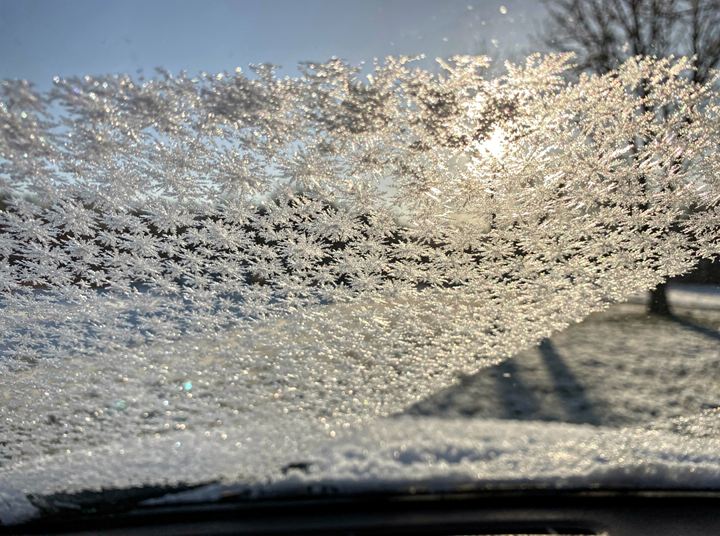
A car's engine is switched off on a cold morning, when the air temperature is 6 °C. At that moment the coolant in the engine is at 92 °C.
The temperature of the coolant falls at a rate proportional to the difference between its temperature and the temperature of the air.
Let $T
nbsp;°C be the temperature of the coolant $t$ minutes after the engine is switched off.(a) Write a differential equation to model this situation.
(b) Solve your differential equation to find $T$ in terms of $t$ and the constant of proportionality.

On a still, freezing night in the Mackenzie Basin, ice forms on a pond. The thickness of the ice increases at a rate that is inversely proportional to its thickness.
At 9 pm the ice is 1 cm thick. Let $x
nbsp;cm be the thickness of the ice $t$ hours after 9 pm.(a) Write a differential equation to model this situation.
(b) Solve your differential equation to find $x$ in terms of $t$ and the constant of proportionality.
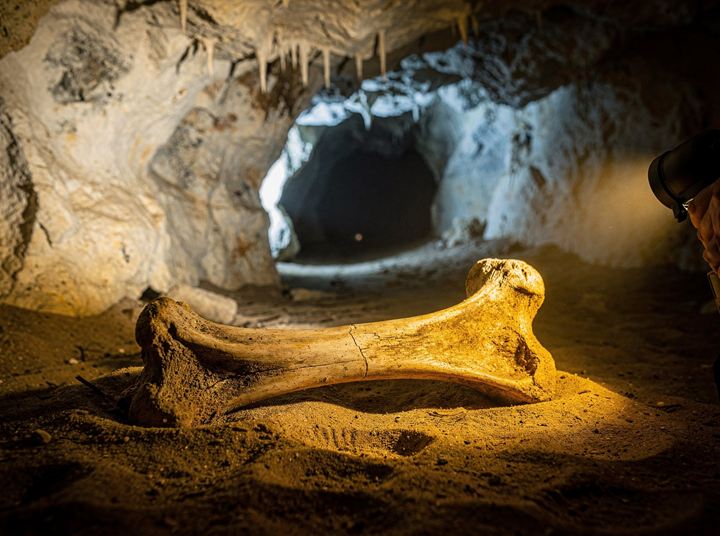
When an animal dies, the carbon-14 in its bones starts to decay. Carbon-14 decays at a rate proportional to the amount present, and its half-life (the time it takes for half of it to decay) is 5730 years.
A moa bone found in a cave contains 72% of the carbon-14 that it contained when the moa died.
Find how long ago the moa died. Give your answer correct to 3 significant figures.
You must use calculus and show the results of any integration needed to solve the problem.
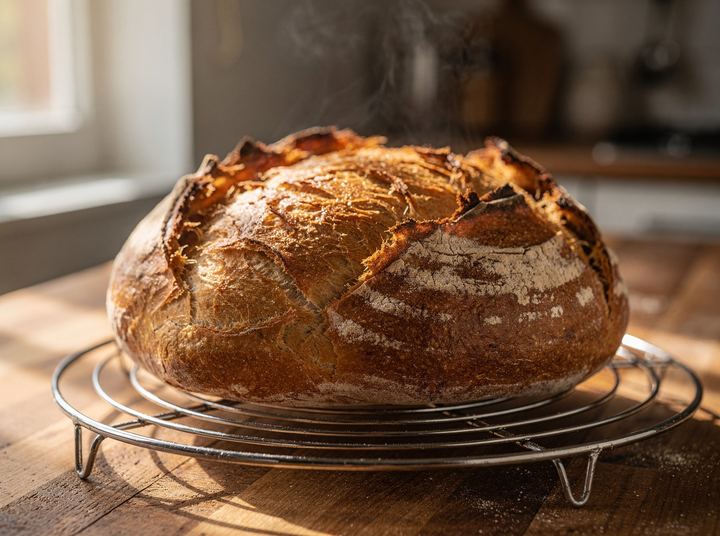
A loaf of bread comes out of the oven at 96 °C and is left to cool on a rack in a kitchen at 21 °C. The rate at which the temperature of the bread falls is proportional to the difference between its temperature and the temperature of the kitchen.
After 20 minutes the bread is at 66 °C. The baker waits until the bread has cooled to 35 °C before slicing it.
How long after it comes out of the oven can the bread be sliced? Give your answer to the nearest minute.
You must use calculus and show the results of any integration needed to solve the problem.
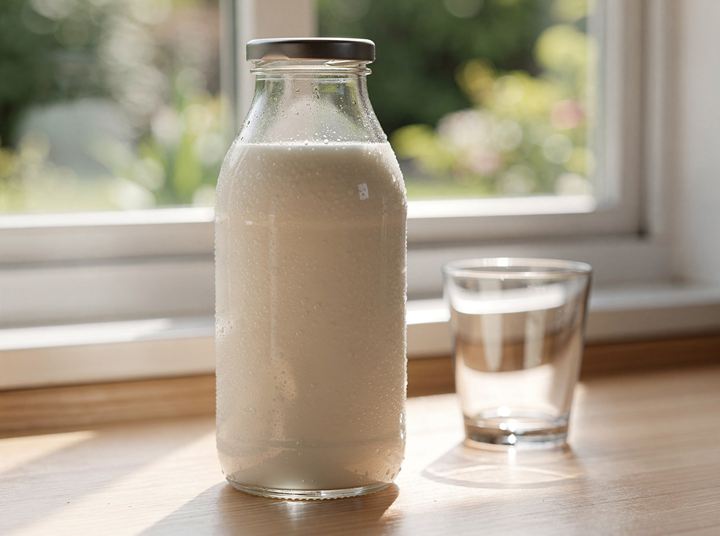
A bottle of milk is taken out of a fridge at 3 °C and left on the bench in a room at 21 °C. The rate at which the temperature of the milk rises is proportional to the difference between the temperature of the room and the temperature of the milk.
After 30 minutes the milk is at 8 °C.
Find the temperature of the milk 2 hours after it was taken out of the fridge. Give your answer correct to 3 significant figures.
You must use calculus and show the results of any integration needed to solve the problem.
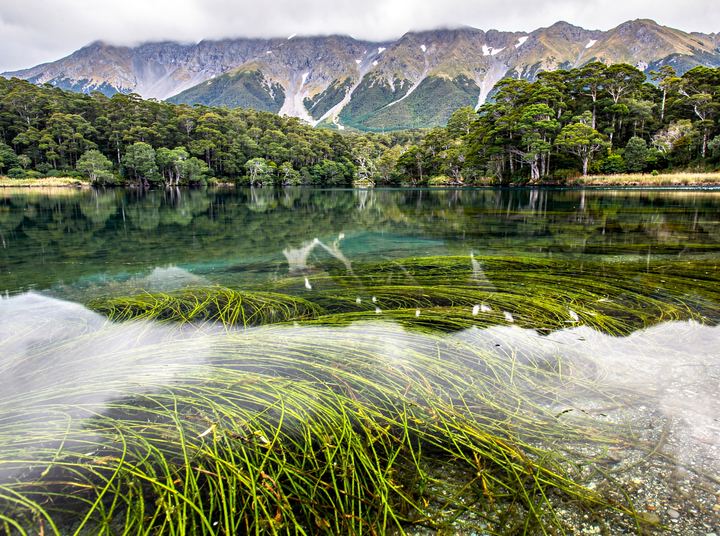
Lagarosiphon is an invasive water weed. In a South Island lake, the area covered by the weed grows at a rate proportional to the area covered.
A survey in March 2023 found that the weed covered 1.8 hectares. A second survey in March 2025 found that it covered 3.2 hectares.
If nothing is done to control the weed, how long after March 2023 will it cover 10 hectares? Give your answer correct to 3 significant figures.
You must use calculus and show the results of any integration needed to solve the problem.
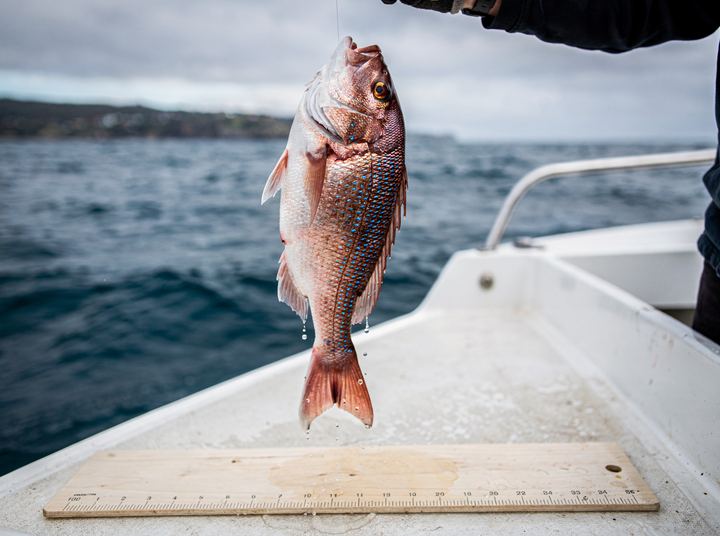
Fisheries scientists use this model for the growth of snapper: the rate at which a snapper's length increases is proportional to the difference between 70 cm and its length. (In the model, 70 cm is the greatest length that a snapper can reach.)
A typical snapper is 9 cm long when it is 1 year old, and 26 cm long when it is 4 years old.
In some parts of New Zealand, a snapper must be at least 30 cm long to be kept. How old is a typical snapper when it reaches 30 cm? Give your answer correct to 1 decimal place.
You must use calculus and show the results of any integration needed to solve the problem.
A cylindrical rainwater tank has a tap 0.25 m above its base. The tap has been left on.
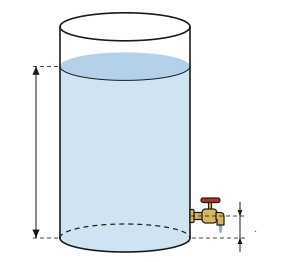
The rate at which the depth of water in the tank falls is proportional to the square root of the depth of water above the tap.
At 7 am the water in the tank is 2.21 m deep. At 11 am it is 1.69 m deep.
If the tap is not turned off, at what time will water stop coming out of the tap?
You must use calculus and show the results of any integration needed to solve the problem.
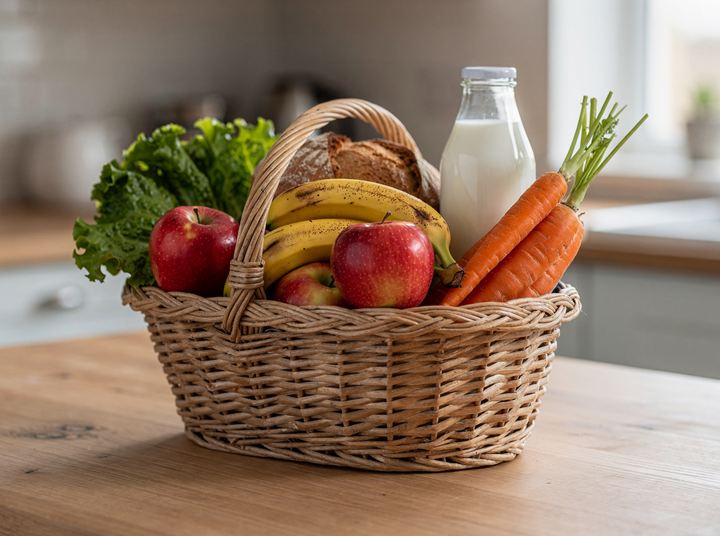
After a period of high inflation, an economist models the cost of a basket of groceries like this: the rate at which the cost increases is $r$ times the cost, where $r$ is the annual inflation rate,
$ r = 0.07e^{-0.4t} $
and $t$ is the time in years after the start of 2023. (So inflation is 7% at the start of 2023, and then it falls.)
At the start of 2023 the basket cost $\unicode{36}200$.
(a) According to the model, how much will the basket cost at the start of 2026?
(b) The model predicts that the cost of the basket will level off. Find the value that the cost approaches.
You must use calculus and show the results of any integration needed to solve the problem.
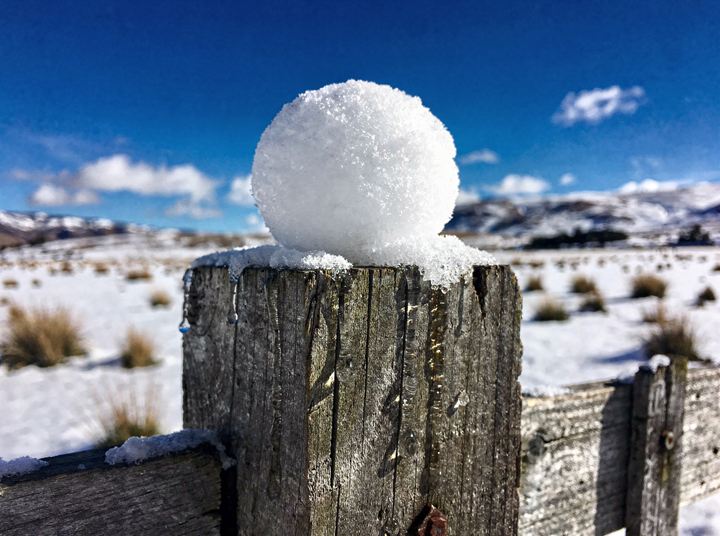
A snowball is melting. Its volume, $V
nbsp;cm3, $t$ hours after 10 am, can be modelled by the differential equation$ \frac{dV}{dt} = -kV^{\frac{2}{3}} $
where $k$ is a positive constant. (The snowball stays a sphere, and its volume decreases at a rate proportional to its surface area.)
At 10 am its volume is 4000 cm3. At noon its volume is 2000 cm3.
At what time will the snowball have melted completely?
You must use calculus and show the results of any integration needed to solve the problem.
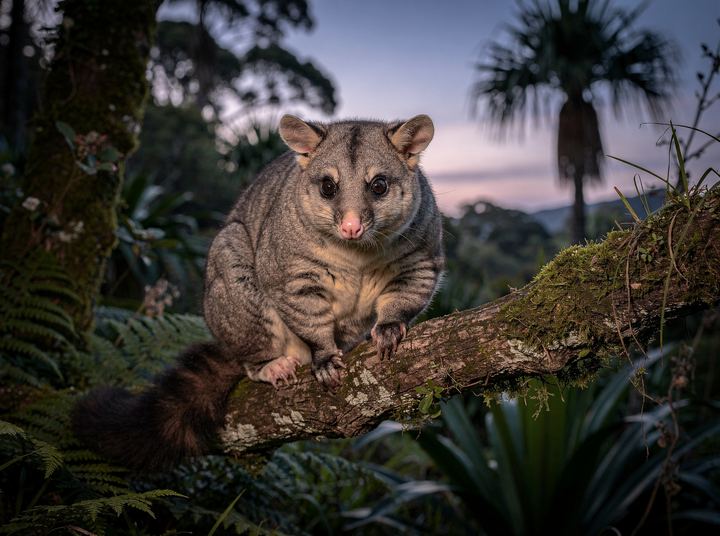
Possums have reached a small island. When trapping starts, there are 1200 possums on the island.
Without trapping, the possum population would increase at a rate proportional to its size, with constant of proportionality 0.3 (time in years). Trappers remove possums at a steady rate of 450 possums per year.
Assume that trapping continues at this rate until there are no possums left.
How long will it take to remove all the possums? Give your answer correct to 3 significant figures.
You must use calculus and show the results of any integration needed to solve the problem.