L1 Mathematical Reasoning
Question Bank
The diagram shows a regular octagon with its center point marked. Calculate the size of the angle shown.

The diagram below shows a pentagon with interior angles given in terms of $a$. All angles are in degrees. 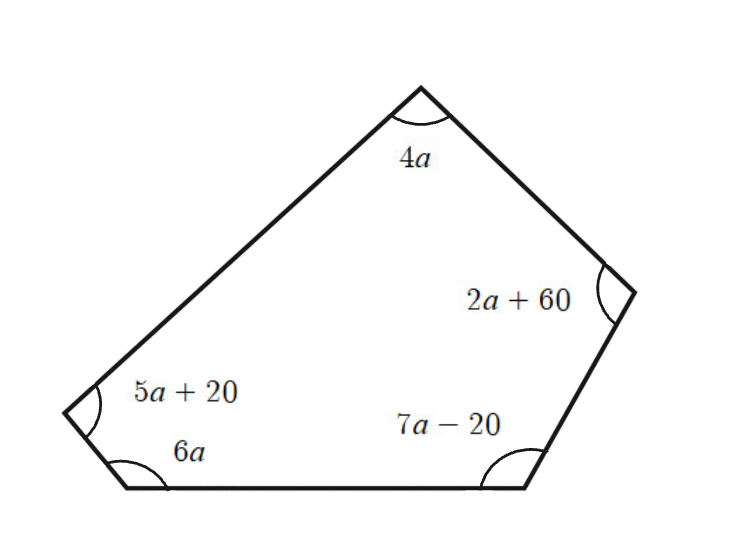
Find the value of $a$.
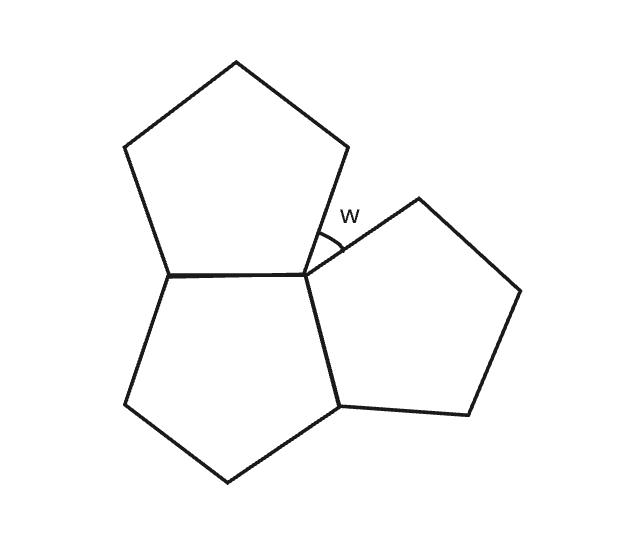
Three identical regular pentagons are joined together at a point as shown in the diagram below. Work out the size of angle w.
The diagram shows part of a regular polygon. The size of the interior angle is 174°.
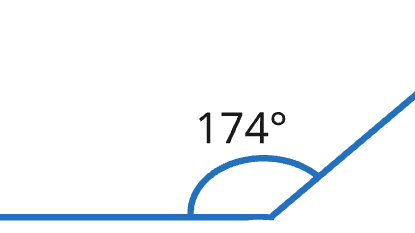
How many sides does the polygon have?
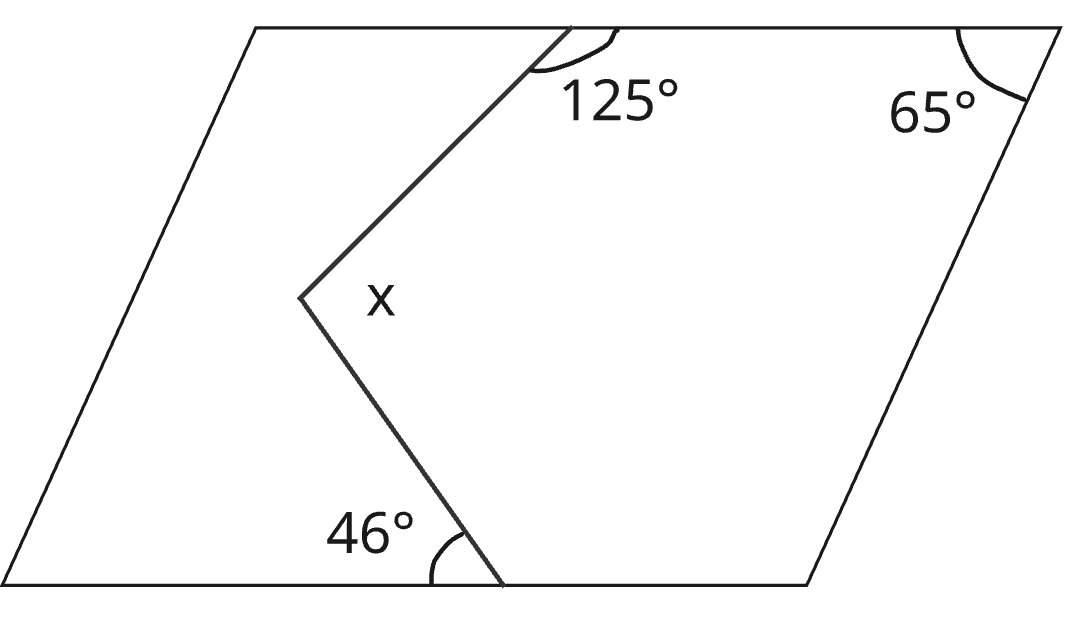
The outer shape in the diagram below is a parallelogram. Calculate the size of angle $x$.
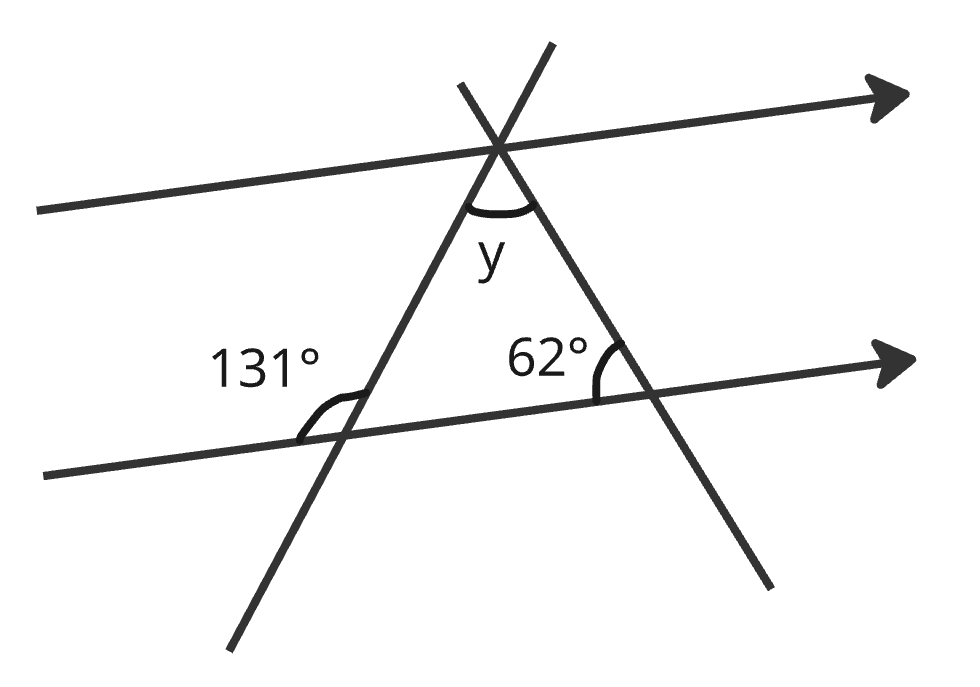
In the diagram below, the two lines shown are parallel. Find the size of angle $y$. You must give a geometric reason for each step of your working.
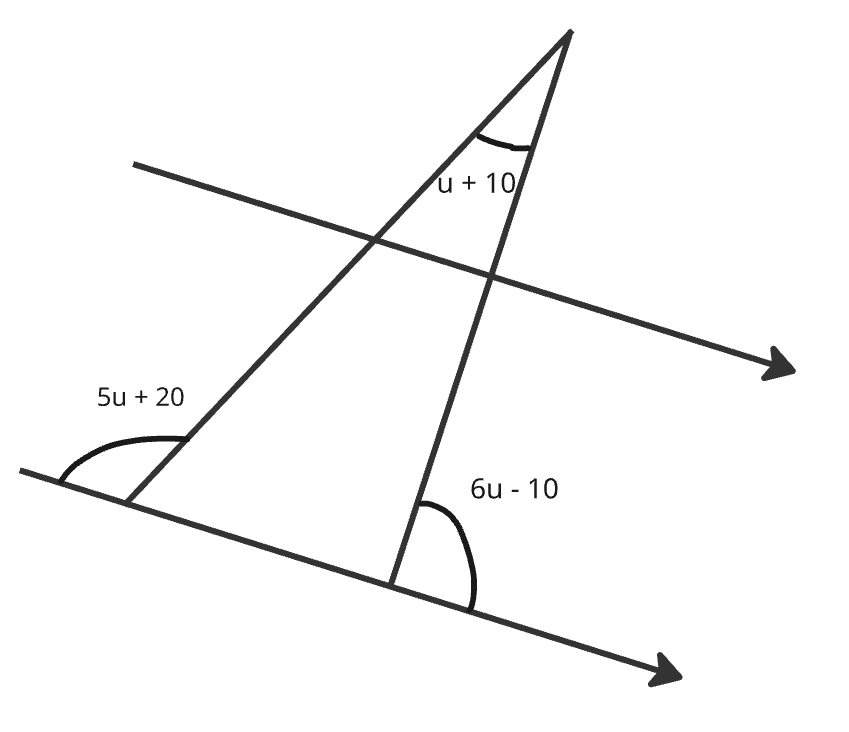
In the diagram below, the two lines are parallel. Find the value of $u$. You must give a geometric reason for each step of your working.
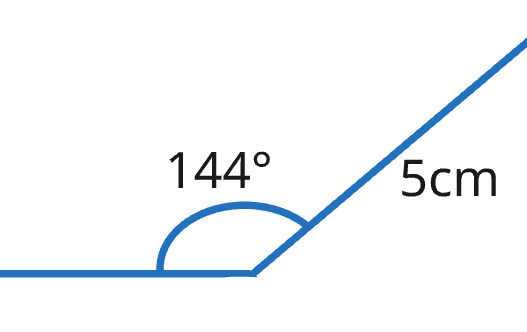
The diagram shows part of a regular polygon. The interior angle is 144° and the side length is 5 cm. What is the perimeter of the polygon?
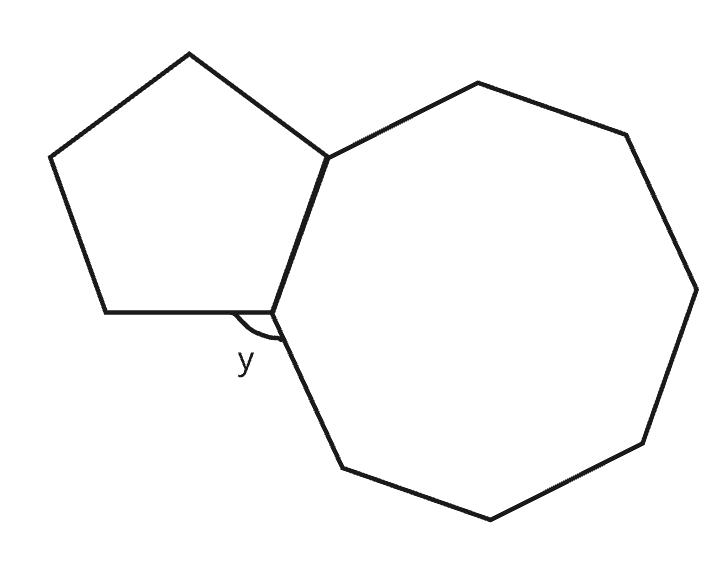
A regular pentagon and a regular octagon are joined along one side as shown in the diagram. Calculate the size of angle y.
The diagram below shows a hexagon with interior angles given in terms of $a$. All angles are in degrees. 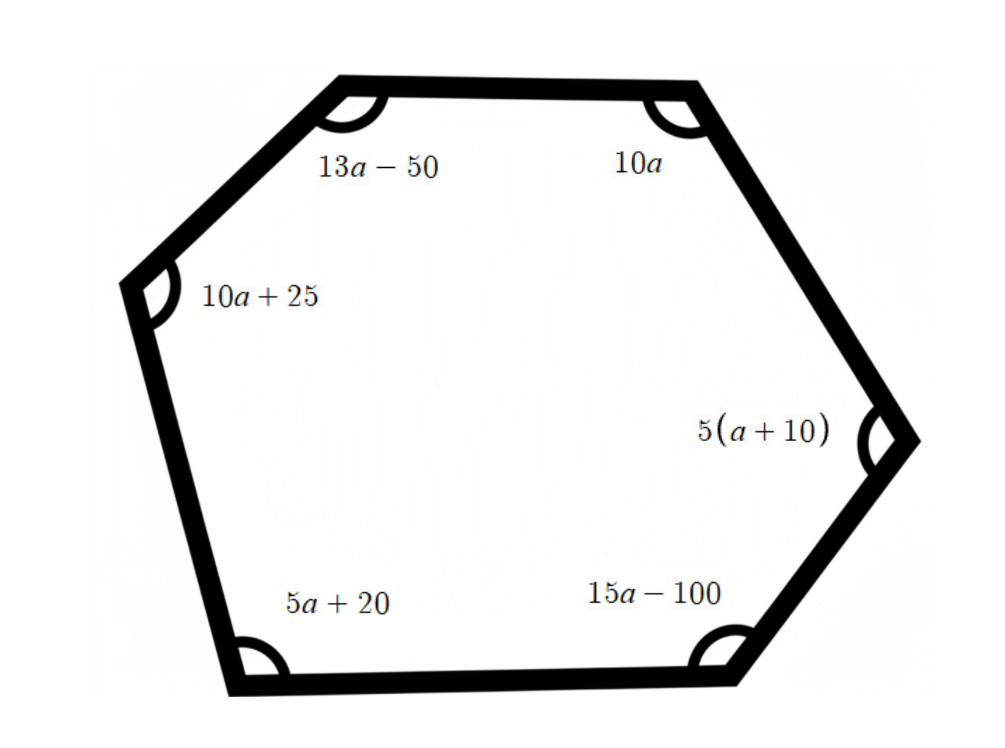
Find the measure of the largest interior angle, giving your answer to one decimal place.
A regular polygon has an interior angle that is 144° larger than its exterior angle. Calculate how many sides the polygon has.
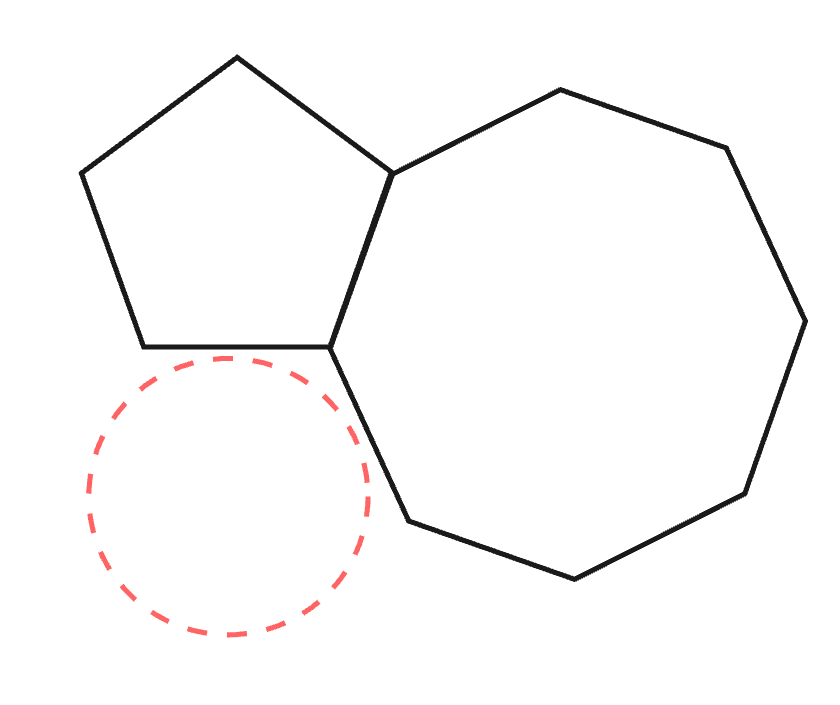
A regular pentagon and a regular octagon are joined along one side, creating a gap indicated by the red circle in the diagram. Is it possible to perfectly fit another regular polygon into this gap? You must justify your answer with calculations.
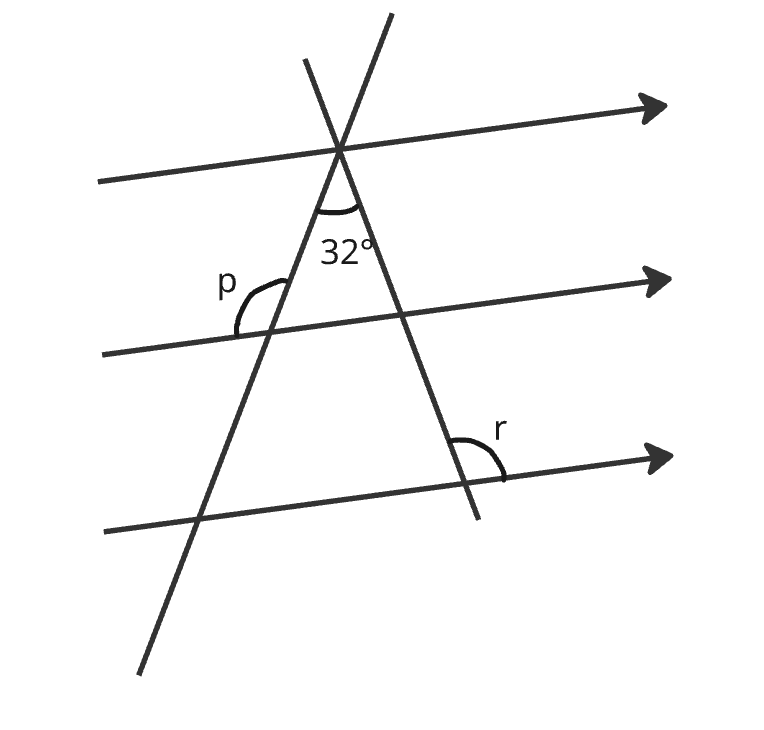
In the diagram below, three lines are parallel. Find an expression for angle $p$ in terms of angle $r$. You must give a geometric reason for each step of your working.
A regular octagon, and two equilateral triangles are joined as in the diagram below. A fourth $n$-sided regular polygon fits in the remaining space perfectly.
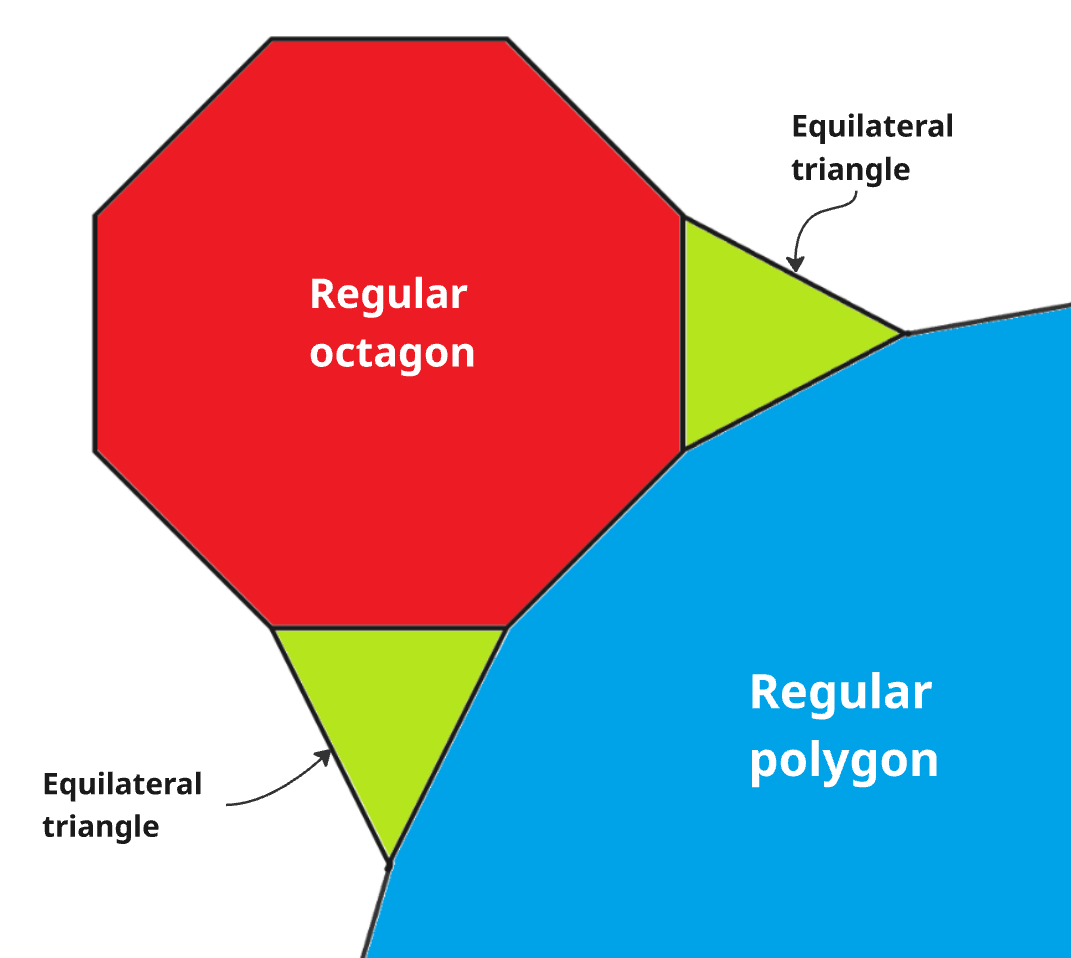
Find the number of sides, $n$, of the unknown polygon.
The diagram shows part of a regular polygon with an interior angle of 144° and a side length of 5 cm. Calculate the total area of the polygon.